
Rochester Cathedral
Rochester Cathedral in Kent is England’s second-oldest cathedral, a vast Norman space of stone, light and quiet continuity where centuries of history meet everyday stillness.
Rochester Cathedral is the second oldest cathedral in England. It carries its age with a quiet understatement. Less ornate than Canterbury, it feels rather grounded. It is a place where history quietly builds in layers rather than in grand spectacle. The main entrance sits to the side, and stepping inside, what striking at first glance is the scale of the interior space: a long sweep of stone, soaring columns, and a sense of height that immediately hushes the voice.
It is a building best experienced slowly. Each corner reveals another fragment of its past: Norman stonework beside later additions, details added and built sympathetically across centuries. Look up and symbolic ‘Green Men’ carved faces peer down from the architecture, reminders that the cathedral has always been watched over. The organ is widely regarded as one of the finest in the country, and the acoustics are extraordinary; a single note seems to linger in the air. If you are fortunate, the cathedral choir rehearsing transforms the space entirely.
Despite its size, the atmosphere remains peaceful. Visitors move quietly, instinctively lowering their voices so as not to intrude on others seeking contemplation. A welcome team is usually present, ready to answer questions without disturbing the calm.
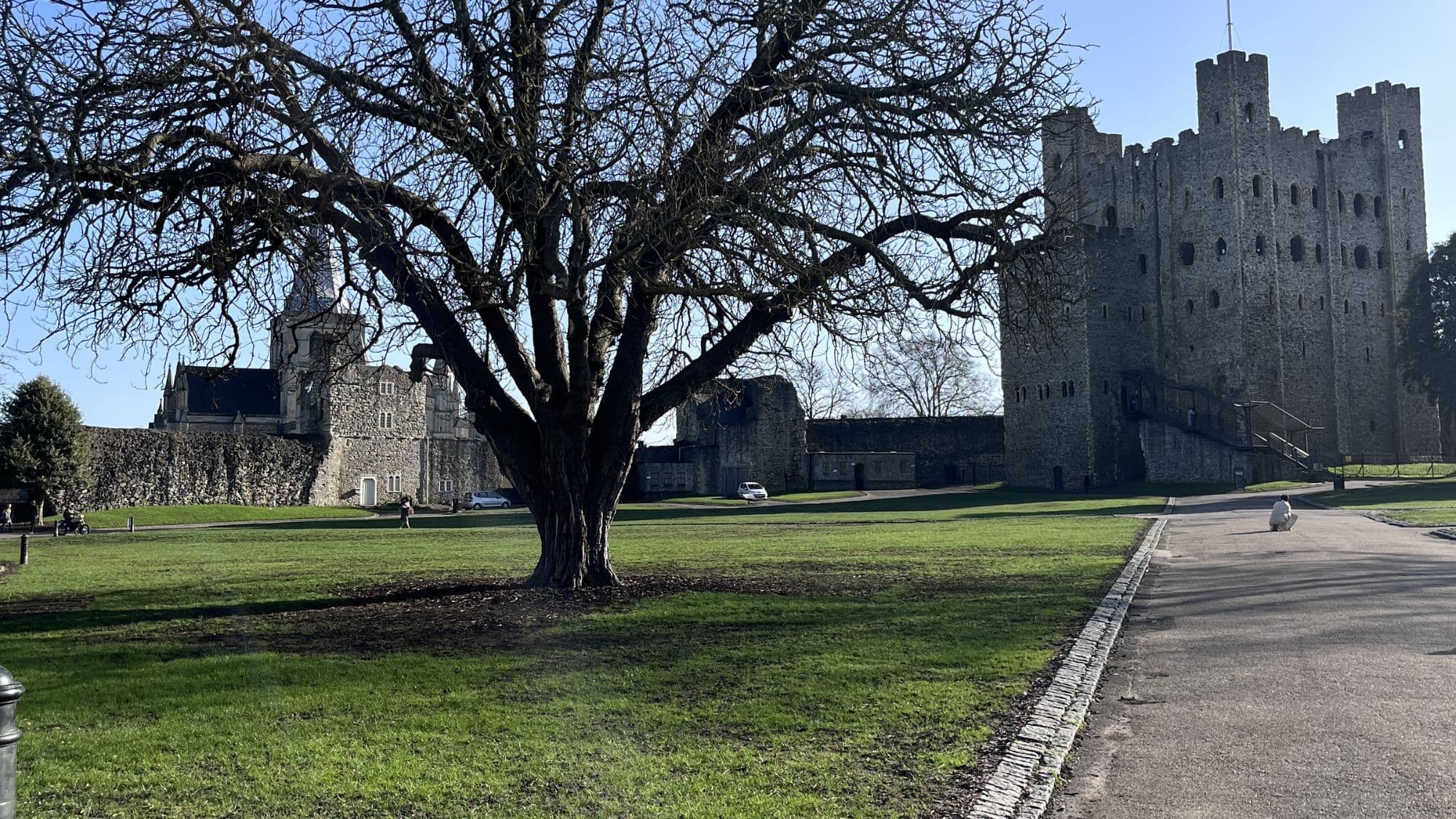
Outside, the rose-filled garden feels tranquil even when visitors gather there, its calm shaped by what surrounds it. Towards the rear stand the roofless remains of the medieval priory buildings, including the Chapter House where monks once met each day to read, write and govern life in the monastery. These stones formed the working heart of a Benedictine community that lived here for centuries until the Dissolution under Henry VIII. Beneath the cathedral, the cool crypt now houses a café – a refuge on hot days and a reminder of how the building continues to adapt to everyday use.
Founded in 604 AD and rebuilt by the Norman bishop Gundulf (also associated with the Tower of London), the cathedral has witnessed well over a millennium of English history. Among its many treasures is the Textus Roffensis, a remarkable manuscript preserving some of the earliest English laws written long before Magna Carta, linking this quiet place to the foundations of the country’s legal history. Around the cathedral are tombs and memorials to bishops and figures connected to Rochester across the centuries, with some laid to rest within the building itself.
Today it remains not just a landmark, but a living place of quiet continuity and reflection - at the spiritual heart of Rochester.
Good to know
Entry to the cathedral is free, though donations are welcomed.
Opening hours vary around services and events, so checking ahead is advisable.
The crypt café offers a cool retreat in warmer weather.
Visitors are asked to respect the quiet atmosphere inside.