
The Vines
A small historic park just south of Rochester High Street, once a medieval vineyard and now a quiet everyday green space beneath an avenue of mature plane trees.
About 1.2 hectares in size and known primarily to residents rather than tourists, The Vines is a small Grade II listed park just south of Historic High Street in Rochester, originally the vineyard of the medieval Priory of St Andrew. After centuries of varied use including pasture and a King’s School playing field, it was leased by the Dean and Chapter of Rochester Cathedral to the city in 1880 as a public open space, a role it continues to serve today.
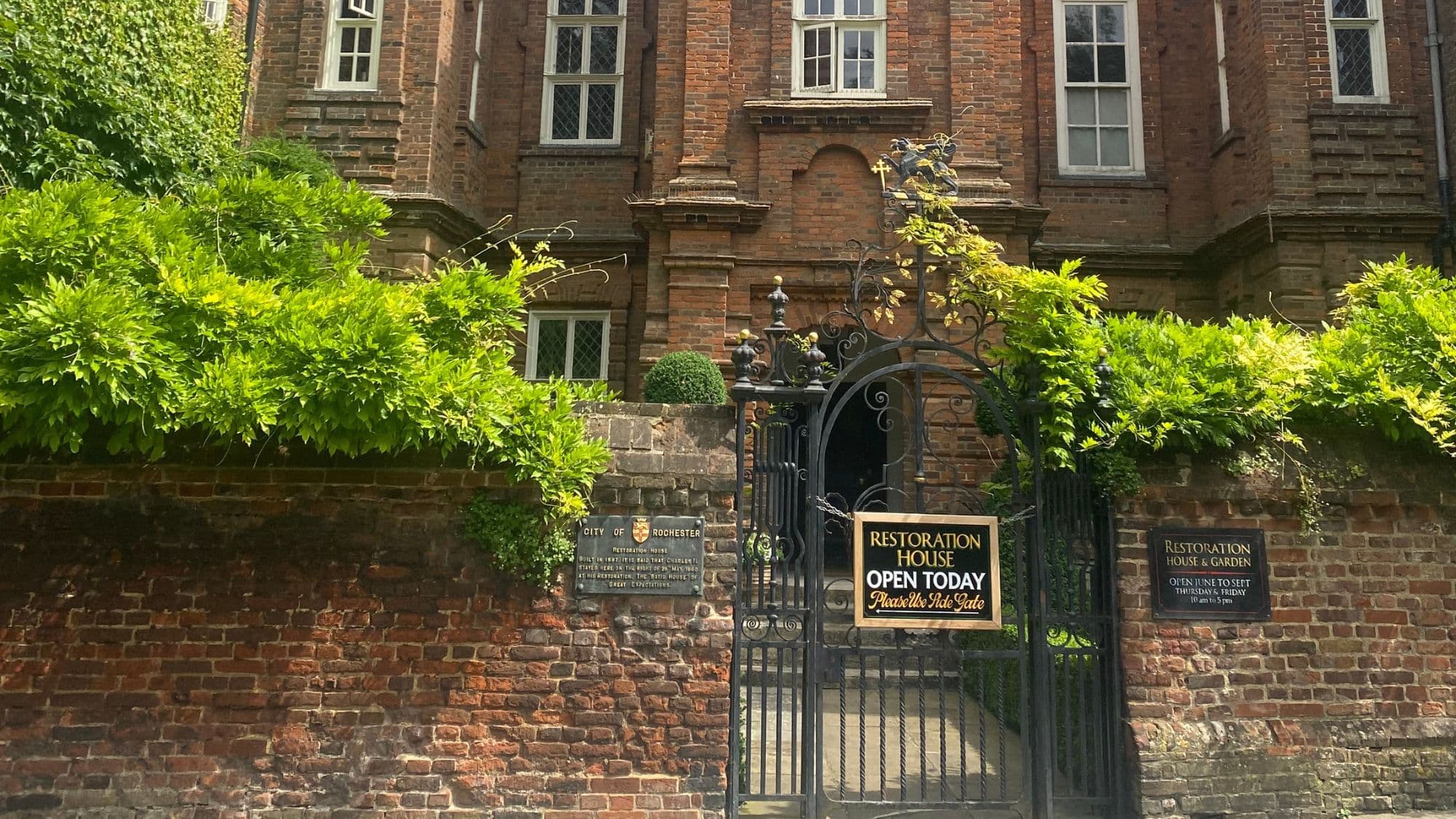
The central Broad Walk, lined with mature London plane trees, forms a shaded route used daily by residents moving between surrounding streets and the historic centre. Overlooked by Restoration House and associated with Charles Dickens, who referred to it as Monks’ Vineyard in The Mystery of Edwin Drood, the park remains both historically significant and deeply woven into everyday local life and is said to have been one of the last places Dickens walked before his death.
Sitting quietly beside Crow Lane, it feels less like a formal park and more like part of the town’s daily fabric. Small in scale but deep in atmosphere, it offers a pause between the bustle of Maidstone Road and the historic gravity of the High Street and river beyond.
A path runs beneath the tall plane trees, their trunks filtering dappled summer light into a soft green haze. Even at midday the space feels gentle. Benches are scattered without ceremony, places to read, eat lunch, or simply sit and watch neighbourhood life pass by at an unhurried pace. Parents teach children to cycle here and dog walkers trace the same routes daily. It is woven into ordinary routines rather than visited as a destination.
In colder months the character shifts. With leaves gone, mist often settles among the bare branches and the lamps glow softly along the avenue. The cathedral spire appears and disappears through the fog, while Restoration House sits just beyond the boundary on Crow Lane, reinforcing the sense that this small space belongs to a much older landscape.
The Vines is quietly special and that is precisely its value. It remains a soft, living fragment of Rochester’s past, a place to slow down, breathe, and pass through gently.