
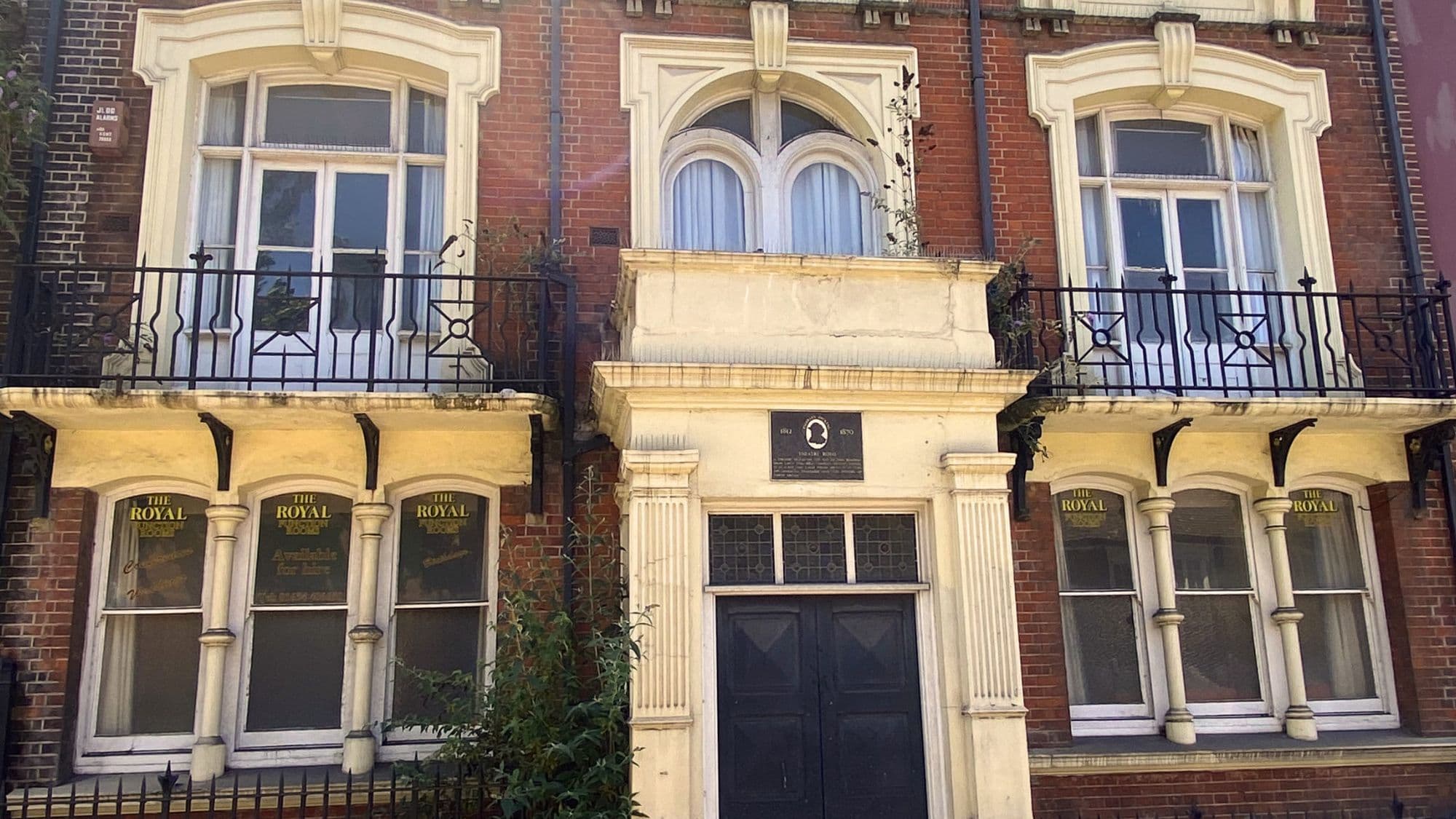
More Than Bricks and Mortar
Using Rochester's Royal Function Rooms as a starting point, this story explores heritage, community and the future of historic public buildings.
There is an important issue taking place in Medway. Rochester’s Royal Function Rooms is at the centre of an important planning debate. The current owners have applied to the council to convert this Grade II listed building into eight dwellings. This would end over two hundred years of public entertainment on the site.
Rochester’s Royal Function Rooms was originally built in the 1700s and later rebuilt in 1894. Until its abrupt closure after the pandemic in 2022, it had always served the community.
The site has also had many important names attached to its history, including Sarah Baker and Charles Dickens, to name only two.
It raises the broader question: What should happen to our historic public buildings?
In Medway and around the country our high streets continue to change, but how should our historic public buildings adapt to this change? When their original purpose comes to an end, should the vision for their new life always be residential flats, or is there an alternative future worth exploring?
This is not an argument against the need for new housing. Medway needs new homes and infrastructure. Nor is this article intended to criticise the owners who have submitted the application.
Before the purpose of any historic public building is permanently changed, can we consider other opportunities for them to continue serving the community in a different way?
This is only one building, but these questions go far beyond Rochester.
Our towns are changing. Do our historic public buildings and public spaces still have a future?
The Building at the Centre of the Debate
The application has been submitted to the council and consultation is underway. The application seeks to redevelop 12 Star Hill and adjoining buildings to change from residential and theatre to eight dwellings (five residential units and 3 townhouses).
The applicant, after researching, considers this the most viable use. It is proposed that the façade and some of the internal fabric of the building will be preserved during the redevelopment, such as the ornate stage area.
Located on Star Hill, today the building is known as Royal Function Rooms. However, behind the walls is a longer and richer history than the name first suggests.
Originally known as the Theatre Royal, the building was built in 1791 by Sarah Baker, a successful theatre practitioner who brought touring theatre to the Kent area.
The theatre also included a private home.
At the time of Sarah Baker's death, it was purchased and remodelled in 1851. The curtain finally closed for the building as a theatre in 1894.
It was then converted in to a Conservative Club but still allowed for live performances.
Until its closing in 2022 it continued to operate as a space for public use: music, comedy and other live events. It's important to note, this is a Grade II heritage asset located close to the Sun Pier conservation area.
There is support for new housing and regeneration in Medway. However, the submission of the proposal to Medway Council has prompted balanced objections from residents, heritage organisations and the Theatres Trust who understand the need for homes but raise the case for other considerations for the site.
What does it mean to preserve a place?
Giving a place or building listed status is not just about preserving a museum piece. It’s about preserving the architectural significance as part of the nation’s heritage. It’s much more than bricks, mortar and timber. It’s about character, history and the social context of how the building was used. In this case, the building links Rochester to the development of early provincial theatre in Britain, through Sarah Baker and the network of theatres she established across Kent.
That is the beauty of Medway. Its historic buildings give the area much of its unique character and identity. Perhaps we can look to Rochester High Street to see this idea in context. Historic England also recognises communal value and social value as part of its heritage values.
It invites us to consider the idea of intangible cultural heritage. Places where we can create, perform, tell stories and celebrate. There is a need for places like this in our local environment, where we connect with each other as a community and with our local built environment. This is increasingly recognised to be of benefit to communities and wellbeing. When we lose a building like this, we lose the opportunity for people to enter such spaces to create ‘living memories’ behind the walls. Spaces become private. More a monument to look at and no longer for the enjoyment of all.
The Question the Application Does Not Answer
Having read the Heritage Impact Statement submitted to the council as part of the application process, it is clear that the document is insightful and detailed. It explains the building’s history very well and was actually very enjoyable to read (we love history don’t you know) and noted the importance and the significance of the building.
However, has every realistic public use been fully explored before settling on a residential conversion as the only viable future for this building?
This is the question residents and respected heritage organisations have also asked. Where is the evidence that continuing as a theatre or live performance venue is unviable? If other alternative uses have not been fully explored how can we know that turning the building into residential dwellings is the only realistic future?
The building did not simply close. We know how challenging it is to run a public-facing establishments across many industries today. However, it is worth noting the operator left after being given notice by the owners in 2022.
There is Another Model
The idea of bringing historic public buildings back into use for today’s communities is not a new idea. In fact, there are examples closer to home here in Medway. Through the High Street Heritage Action Zone, around 1.6 million pounds was invested across Star Hill to Sun Pier area to help repair historic buildings encouraging use for the local community and to help the local economy.
Medway
Intra: The Intra building located in the historic Chatham Intra area, is an art deco fronted public building redeveloped for public use. Today it serves as a community and arts centre and is the home of Intra Arts. Provides studio spaces, creative workshops and facilities. The building is used by artists and the community. From photographers, ceramicists and those who work with crafts. It also opens its doors for classes and courses for every skill level. The community can also enjoy exhibitions and arts events, a positive impact on social wellbeing.
Sun Pier House: A little further along is Sun Pier House on Chatham High Street. Recently transformed into a creative space for local artists and makers across three floors. With a dedicated Gallery for exhibiting art and flexi-use rooms for community use and a café.
These are spaces that do not compete - they compliment one another.
National Examples
Looking at the wider UK landscape we can find other examples:
44AD Artspace, Bath: Based in a Georgian building next to the Roman Baths. It is a community focused charity, artist-led, arts venue. It features an art gallery and affordable studio spaces for artists. The community can also enjoy public exhibitions and events as well as seasonal markets.
Saint Luke’s, London: A 18th century church closed in 1959 due to structural problems, now restored and known as LSO Music Centre. Where LSO do community outreach music education programmes. Also used for rehearsals, free lunchtime concerts, family sessions. Also, Jerwood hall is available for hire for private and public hire.
Stanley Arts, London: A Grade II listed building dating from the early 1900s it was always meant to be used for civic use – housing a theatre, art gallery, assembly rooms and concerts. Today it’s an artist and performance venue with a programme of music, dance, theatre, exhibitions and community engagement events.
As shown above this model has worked well elsewhere. These are realistic examples of spaces made for public consumption - for dance, music making, theatre, artists, actors and rooms for hire. Perhaps models like these could be fully considered before it's concluded that residential homes are the best option for buildings like these.
Imagine Another Future
Imagine what a building like this could become. A space for public life. A civic building.
Ground Floor: A space that anyone can walk into for a coffee or something to eat. A flexible performance space for live music, band rehearsal space, music lessons, fringe theatre, lectures, comedy and heritage events.
Upper Floors: Offices for arts charities, theatre groups, community organisations and heritage groups. Education rooms for schools, writing workshops and adult learning.
Interpretation Room: A permanent exhibition telling the story of the building, the history of theatre in Medway and Kent and the generations of people who have passed through it.
Flexible Hire: Weddings, celebrations, community meetings, business networking and local events.
This is just one idea, and there are many more that could be explored. The vision is not that the building should become one particular thing. Rather, it's that historic buildings can continue to serve the public in new ways that compliment other offerings and attractions in the area.
Maybe none of these ideas are the answer, and another use might ultimately prove more appropriate. But before accepting that the only future for a historic public building is private residential use, perhaps we should first imagine whether it could remain a civic space for future generations.
Houses Matter Too
Like many areas around the UK, Medway needs new homes too. The council's Local Plan sets out the plan to build over 24,000 over the next decade or so. It also outlines the need for nurturing healthy communities, supporting and improving quality of life alongside strengthening infrastructure the community needs.
When we think of infrastructure we tend to think of roads, bridges, health services, schools and utilities. However, there is another infrastructure that relates to what we are discussing here. Social infrastructure. The places where communities come together to create, learn, volunteer and celebrate. Theatres, libraries, community halls, youth centres, sports centres all contribute to health and well-being.
So, the question now becomes: Do eight new dwellings justify the loss of a building that has supported Medway’s public life for over two hundred years. Does a mixed-use future actually exist for this much-loved building?
Housing and heritage do not sit at opposite sides of the room. In fact, together they help a town thrive.
What Kind of Town Are We Building?
People make up our communities, and people want to spend time in places that look after both our physical and emotional wellbeing. Places that bring comfort, create connections and nurture a sense of belonging. Communities want to feel happy, feel proud and feel that they belong somewhere.
In that sense, we can also say that the physical landscape, historic buildings, culture and traditions all help shape a town's identity. What is available within a community inevitably affects how a place is remembered and how we feel about where we live.
Perhaps this also raises yet another question. Are culturally significant buildings worth protecting - not only for their historic fabric, but because they help safeguard our roots and cultural identity through the activities that take place within them?
A discussion that comes up time and time again is this: as online shopping continues to grow, what is the future of our high streets? Is there still a reason to visit them? Yet not every experience can take place through a screen or via the click of a button. We are human. We want and need human interaction.
There is growing demand for independent businesses and meaningful experiences. We see this in places like Rochester High Street, Faversham and Blackheath. Communities also need places where people can create, learn and discover new passions outside the classroom. Spaces like Intra, Sun Pier House and many others demonstrate how historic buildings can continue supporting creativity, education and community life. If society is increasingly valuing experiences over possessions, perhaps these places become even more valuable.
Historic England invested in High Streets Heritage Action Zones across England to help revive struggling high streets while respecting the historic character of their buildings. The aim was not simply to restore architecture, but to support communities, encourage local investment, change perceptions, rebuild civic pride and ultimately bring people back into their town centres.
So perhaps the final question is this: What kind of Medway do we want to leave to the next generation?
A place that simply remembers its history, or one that continues to live it? A place where people feel proud to belong, where communities come together and where historic buildings continue to play an active part in everyday life. After all, heritage is not only about remembering the past. It is also about creating the memories that future generations will one day look back on.
Stewardship
While researching and writing this article, it has become apparent that the idea at the centre of everything discussed is stewardship.
So, what is stewardship?
Perhaps it is about protecting the buildings that have served our communities for centuries while also protecting the ways in which we enjoy and engage with public life in our local areas. It is not simply about preserving the façades of historic buildings that we are fortunate enough to still enjoy. It is also about understanding the past while continuing to create living memories that contribute to civic pride and preserve something meaningful for the next generation.
This article is based on publicly available planning documents, the Heritage Impact Statement, responses from heritage organisations and wider research into heritage-led regeneration. It reflects the author's opinion.