
Chatham: Along the River and Beyond
A layered town shaped by the river, where historic dockyards, open space and everyday life sit side by side.
Chatham in Medway
Chatham sits next to the River Medway, it's landscape far reaching. The town offers a mix of historic dockyard, open landscapes and independent spaces, making it one of the most layered places to explore in Medway.
Where Historic Rochester’s footprint is compact and gathered around a single high street, Chatham lives across many different contrasting pockets. River edges, open countryside, land dedicated to agriculture at the edges, and a busy town centre.
The River Medway remains central to Chatham. It continues to shape the town much as it has done for centuries. Shipbuilding, defence and naval industry once defined this stretch of the river. Today, Chatham leans on what was left behind when the docks closed abruptly in 1984. Dockyards, fortifications and historic buildings from a more prosperous era still stand with a quietly steely presence.
What remains today, is not so much a beautifully preserved historic town but one built by many layers over time. The past is visible, almost majestic in its stillness, yet it holds the present in an assured yet almost forgotten way. In working streets, in small independent places, and the community that continues to shape the town in quieter ways.
Chatham is not immediately picturesque in the way neighbouring Historic Rochester is known. But spend time here and a different quality begins to emerge. One of space, rawness, resilience and slow change, where the river still guides the pace and new life gathers gradually around what came before.
Chatham sits within Medway, just beyond Rochester, and is often experienced as part of the same stretch along the river.
Architecture & Built Environment
Layers of the Town
Chatham builds in layers, telling a story of two cities meeting across time. Once a town of wealth, this is still evident in the concentration of detail across Tudor structures, Georgian brickwork and Victorian Gothic architecture, all sitting side by side.
On the next block, Brutalist structures of the 20th century sit with equal presence, where concrete is used in abundance. Unlike the compact feel of Rochester, moving between streets and green spaces reveals a town of heavy contrast.
Along the pedestrianised High Street, Georgian and Victorian buildings rise above, while the shopping centre, set in a pentagonal form, stands as a clear reminder of the 1970s. Like many buildings that sit alongside the older architecture, it reflects a different moment in the town’s development.
The streets of Chatham Intra hold a different rhythm. Historic buildings remain, but in more recent years have begun to return to life, with colour and small independent spaces quietly shaping a more creative direction.
The Dockyard
The dockyard structures dominate the landscape here, their scale giving a clear sense of the town’s naval past. Large walls still stand, separating what was once a secure and busy working site from the town beyond.
Buildings sit with purpose rather than decoration. Offices, houses and working spaces remain, each reflecting a time when function defined the architecture.
From Industry to Quiet Use
Today, the historic dockyard has taken on a different role. Parts have become residential and commercial, while others remain open as a working heritage site, where traditional crafts such as rope making still continue. Scale remains, but how the space is used has changed. Each building stands as a quiet reminder of what once defined this place, with people passing through more quietly.
The River Medway Through Chatham
A Quieter Spine
Today, the River Medway sits as a quiet backdrop cutting through the length of the Medway towns. Where it was once the focal point of activity, it now acts as a quieter spine, glimpsed through narrow streets just off the main thoroughfares of Chatham or reached more directly in places such as Sun Pier and the dockyard and dockside areas.
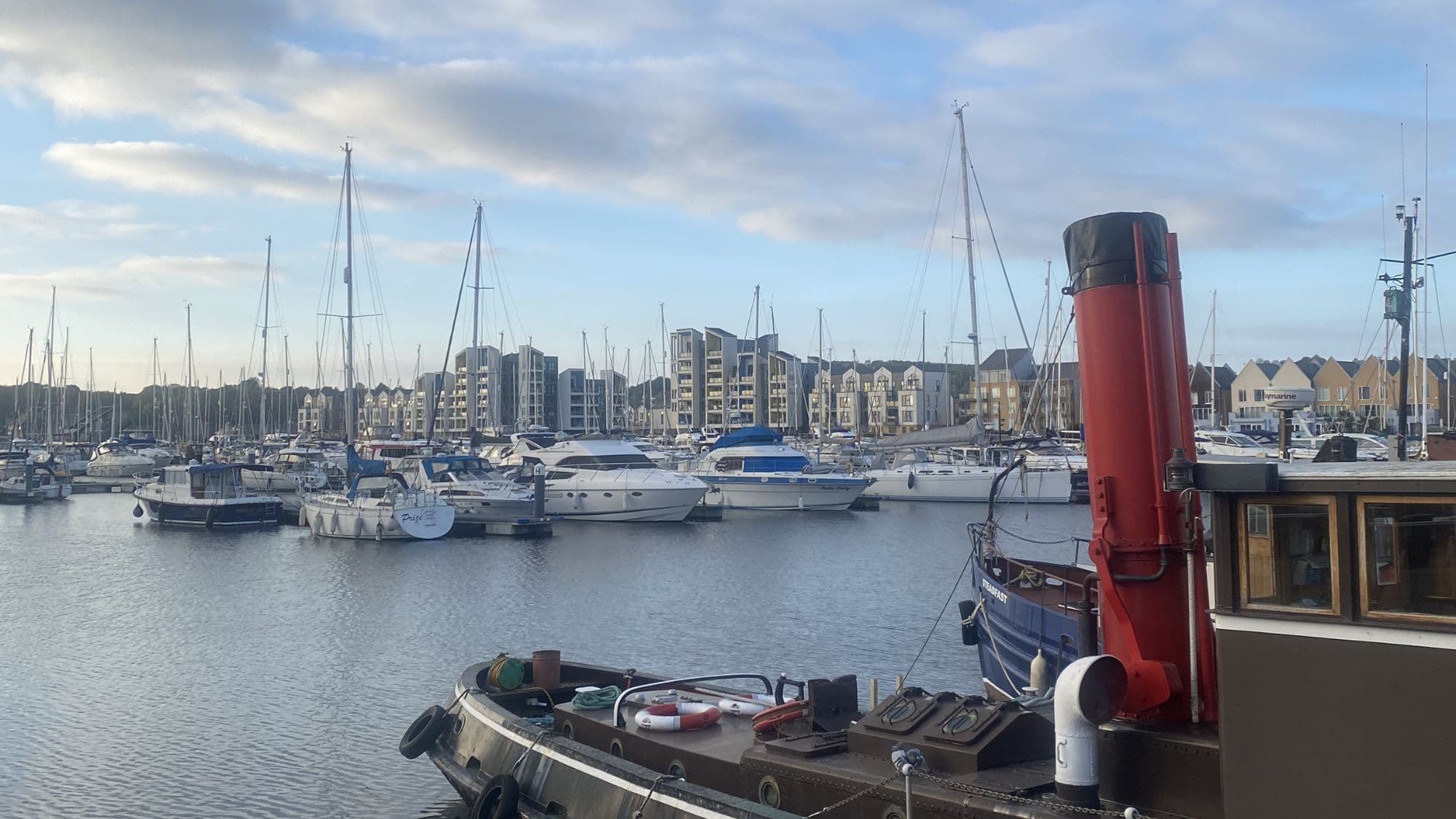
Around the dockside and the basins, parts of the river’s edge have begun to slowly shift in use. Restaurants and independent spaces like Copper Rivet Distillery gather in modern and historic buildings along the water. A quiet move from industry to leisure. Yachts and boats sit docked close by on the marina, while other stretches remain softer, with paths that allow you to move alongside the river away from the busier parts of the town.
St Mary’s Island
Close by, reached by bridge, St Mary’s Island is a more contained residential area. Once the island was closely tied to the dockyard’s working past. Shaped by industry, labour and the presence of the river itself. The river here carries a certain history too. It once held prison hulks where the sick and the criminal were quarantined away from the population. A presence that inspired the writing of Charles Dickens and still sits quietly beneath the surface of the landscape.
Today the island feels softer and more settled. Homes here are colourful and Nordic in feel, leaning into their waterside setting and open views across the river. The openness of the surrounding water still holds something of that earlier purpose, while the movement of the tide and the presence of Upnor Castle across the water continue to shape the scene.
Everyday Chatham
Chatham today reflects its quiet and slow decline since the closing of the dockyards in the mid 1980’s. The economic challenges it faces are visible, but so too are the buildings from its grand past, still towering above the streets, shaping how the town is experienced.
A Working High Street
The shops that serve the community reflect the needs of the people who live here. Rarely highlighted, Chatham was once a cultural melting pot, shaped by its role as a port town where sailors from around the world stepped off ships and into the town. Today, many cultures still live side by side and the High Street continues to provide what is needed day to day.
The chains have largely gone, though Waterstones remains, serving students from the nearby university, alongside fast fashion chains like Primark. Wetherspoon’s anchors one of the High Street’s more prominent historic buildings. Here too is where culture and the arts play out behind the walls of Central Theatre. Around them sit vape shops, halal butchers and general stores, forming a retail landscape that feels functional rather than curated.
Routine Over Destination
The Pentagon remains home to many of the retail brands a town depends on, while on Saturdays the indoor market fills with food stalls serving home cooked dishes that draw people in. It feels active in a different way, shaped more by routine than destination.
There is effort here. In the businesses that stay open, in the small independents, and in the way the High Street continues to function despite its changes. It is not always immediately visible, but it is present.
This is a town that is not as vibrant, but it is punctuated by places worth stopping by and visiting.
Places to Pause
There are places in Chatham that offer space for a gentle pause. They can be found in many areas around the town. They don’t announce themselves or draw attention. More often they are found gradually, during slow walks and exploration or passed on through word of mouth.
Quiet Interiors
Café Nucleus sits behind inconspicuous black iron gates on the main stretch of the high street. It feels out of place where it is found and can easily be passed without noticing. Inside, the mood shifts immediately. Its courtyard opens wider than expected, softened by planting, light and small details that create a space suited to lingering over a coffee rather than passing through. It feels totally separate from the High Street, a gentle oasis, while still belonging to it.
Closer to Intra, Mrs Sourdough sits quietly within the narrowing stretch of shops. There is little to draw attention from the outside. Inside, the rhythm is steady and familiar. Fresh bread moves throughout the day, shelves gradually emptying. The pace is shaped by the process while the cosy interiors offer a place for a quiet pause over a hot drink. It’s a place that is part of the community’s routine.
Beyond the centre, seated beside the marina across from St Mary’s Island, The Ship & Trades offers a quiet spot by the water. It is the sort of place reached as part of a walk rather than sought out directly (unless you are staying at the hotel), where a pause comes naturally from the setting. On fine days, the river feels decidedly continental here, overlooking the boats and yachts that gently sway.
Across Chatham, places to pause are not gathered in one area or clearly defined. They appear within the fabric of the town, shaped by movement rather than intention.
Beyond the Centre
What changes when you leave the High Street is revealed slowly. The landscape begins to open out. Major roads pass through, but the density of buildings starts to break. Concrete gives way, gradually to greenery. There is more air, more space, and a shift in how the town is experienced and calms the senses.
Space & Elevation
Moving further out, the Great Lines and the steep hills around Fort Amherst introduce far reaching views into the distance. From here, the town below feels more spread out, its different parts easier to understand when seen from above all at once. The concentration of the buildings of the high street and the gentle flow of the river. The openness is meditative. Movement slows, and the edges of Chatham feel less contained.
At the River’s Edge
On the river’s edge, places such as Riverside Country Park soften the landscape again. Linear paths follow the water giving way to something quieter in contrast to the town. People slow down here, jog or cycle into the distance. It’s a space for walking, sitting and passing time with or without purpose.
Chatham does not unfold in a single continuous way. Its size influences how it is navigated. Areas are reached and explored in parts rather than as one connected whole. Leaving the centre makes this clear. The town becomes less about a single place and more about a series of spaces shaped by distance, openness and the river that continues to run through them.
Movement Through Chatham
Chatham cannot be experienced as a single walkable centre. The distance between its different parts and the way the town is laid out means movement has to be more deliberate. Moving between areas is often better navigated by car or transport links, or approached as longer walks.
A Town Experienced in Parts
The High Street, the dockyard, the river edge and the surrounding open spaces each sit within their own pockets. Connections exist, but they are not always immediate. Routes are shaped by roads, bridges and the inclines and declines of the landscape rather than a continuous path.
Walking works in parts. Short stretches reveal detail, but covering the town in one movement is less natural. Exploring Chatham often means choosing an area and spending time within it.
The size of Chatham influences how it is navigated. It’s a town experienced in parts, understood gradually, where each part builds a wider picture rather than forming a single, complete view.
Who Chatham Suits
Chatham will appeal to those drawn to maritime history, architecture and the legacy of its naval past, where the town’s identity still firmly sits - in the buildings and landscape.
Families are well served with plenty of green spaces and places such as the dockyard and its museums, where the scale and history of the site are perfect for exploring.
For Those Who Look Closer
It also suits those who are willing to look beyond the surface and a little closer. Chatham is home to a growing creative and cultural scene, not always immediately visible, but is gradually revealed in the independent spaces, behind the walls of restored historic buildings and the quieter parts of the town.
Chatham rewards a slower, more observational approach. Yes, it’s raw and yes, it’s edgy, but it has character. It is not a place that presents itself all at once, but one that reveals itself slowly over time.
The Character of Chatham
As the day moves on, Chatham continues to shift. The rhythm of the town changes, and the atmosphere moves with it.
The tide of the river gently pushes and pulls, shaping light, space and pace in quieter ways, while the streets take on a different energy as movement changes.
Chatham does not resolve into a single feeling. It holds contrast, between openness and density, past and present, calm and edge.