
A Quiet Walk Through Upnor
Where the River Medway begins to meet the estuary, Upnor rewards a slower pace through riverside paths, maritime history and one of Medway's quietest villages.
Part of the A Quiet Walk series
Arrival
The sleepy village of two parts.
Upper and Lower Upnor sit peacefully on the banks of the river Medway, just before estuary water begins to open up. Hidden within the deep greens of the Kent countryside, Upnor feels somehow quieter than the places around it. From Upnor Road you would be forgiven for driving through. Viewed from St Mary Island Upnor Castle becomes a silhouette at sunset, the river reflecting the last of the colours of the summer evening sky. But here on this hushed country lane Upnor village quietly asks you to stop. We park in Ordnance Yard. Birdsong carries gently in the air while the occasional car continues towards Hoo village. Here is where the river, history and silence begin to slow everything down.
Narrow paved steps reveal a path that feels more like a hidden local short-cut than part of a long-distance coastal walking trail. High stone walls give hints at the military landscape that once shaped this stretch of the Medway. Broken glass, sat a top of the wall, still catches the light, a reminder that this wall once guarded something far more strategic.
Lower Upnor
The high street. A cobbled street leads gentle downhill towards the Medway river. There’s a stillness in the atmosphere forcing hushed tones against the sound of shoes on the cobbles. Quaint cottages, paned and sash windows, white weatherboard and red brick. Tall chimney breasts. Little white picket fences. Two pubs still serve this small community - The Kings Arms and The Tudor Rose and a castle.
Built to protect Chatham Dockyard across the water, Upnor Castle has kept watch of the river for more than four hundred years. Looking out from here, across the Medway, every bend of the water feels visible from the castles position. For centuries this was a village shaped by defence, communication and the ebb and flow of the tide. It’s strange to think the same tide that gently lifts yachts – once carried enemy boats towards Chatham. In 1667 these waters witnessed one of the darkest moments in the Royal Navy’s history. Dutch warships sailed up the Medway revealing how vulnerable the dockyard was, the very place this castle was built to protect.
The village still feels shaped by this history and it becomes clear that this tiny enclave was for the families of the workers. This high street sits much the same as it always has though calmer than when the castle was a working artillery fortification. Once a high street that had what a community of this size would need - a butchers, a general store, a post office and plenty of pubs. Over time activity slowed, fading into a gentle slumber. Today it’s a residential. That’s its beauty.
You can almost touch the past. Faded memories in the mind’s eye of workers walking wearily home after a long day. Watermen and bargemen, lips salty from the estuary air. A Victorian wife standing on the steps. Full skirt of dark heavy fabric swishing with each turn. The sound of children playing on the cobble stones. This is a place untouched by time where the imagination can truly wander.
Modern and historic buildings sit side by side, street by street. Depending on the mood the route might sometimes take the longer path through Admiralty Terrace where 19th century terraced houses guide towards the river’s edge where Admiralty Road is met. This route follows a narrow path set against the river bank back to Upnor Castle. Climbing the incline of the High Street gives a new perspective when heading back to Ordnance Yard. These warehouses, once the store for ammunition and gunpower have found a quieter purpose. Behind the old brick walls, Bunny and Bear serve coffee and cakes during the day, Os Comancheros brings the building back to life again in the evening.
The River
Just a little further along Upnor Road the village begins to feel slightly more open and residential. Manicured lawns and cherry blossom trees sit beneath a terrace of newer homes, thoughtfully placed to overlook the river. A little further still, boat masts rise above wooden fences. A few short steps quietly reveal water before the river comes fully into view.
Upnor Road runs alongside the Medway where riverside pubs overlook yachts that rise and fall gently with the tide, their reflections shimmering across silvery water. Colourful yachts catch the light of the summer sun like small sparkling gems giving a sense of continental landscapes.
The Estuary
The promenade brings together many of the village's quieter landmarks: pontoons, the yacht club, an obelisk and the listed Arethusa figurehead, still gazing towards the estuary from behind its protective railings. Once the figurehead of HMS Arethusa, a ship that served during the Crimean War, she now watches over a much softer stretch of river.
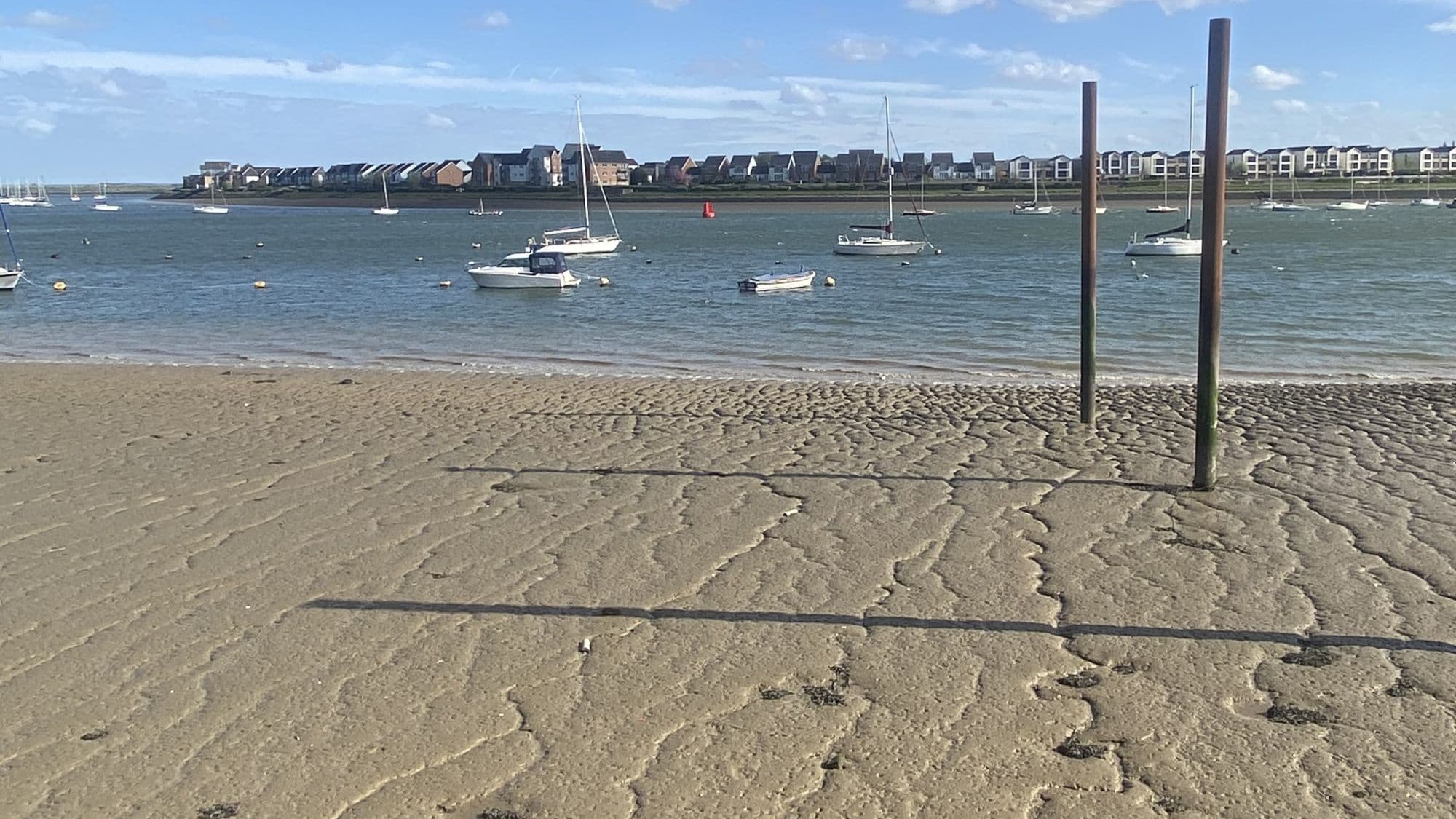
Beyond lies what locals simply call Upnor Beach. This narrow strip of sand appears for only a few hours each low tide. Dogs race across the exposed shoreline before shaking off the river water and continuing the walk, while the meeting of fresh water and salt air still supports the wildlife that has long called this stretch of the river home.
Eventually King Charles Coastal paths begins to dissolve into marsh and mud, the estuary widening with each step. Whether you decide to turn back after half an hour or continue towards Hoo almost does not matter. A walk through Upnor isn’t about reaching a destination. It’s about discovering how quietly a place can hold on to its past.
Walking Notes
Parking: Free parking is available at the Upnor Castle Car Park when open and nearby around Ordnance Yard, although spaces can fill quickly on sunny weekends.
Check the tide: Parts of the riverside path and foreshore change dramatically with the tide. If you're planning to continue beyond Upnor towards Hoo, it's worth checking tide times before setting off.
Expect mud: After rain or at high tide, sections of the coastal path beyond the village can become muddy, so sturdy footwear is recommended.
Facilities: There are no public toilets within Upnor village itself. If you're stopping for refreshments, the village pubs or cafés are practical options.
Refreshments: Coffee and cakes are available at Bunny & Bear Café, while The Kings Arms, The Tudor Rose and The Pier all make good places to pause for lunch or a drink.
Allow time: Although the village itself is compact, it's easy to spend two or three unhurried hours exploring the riverside, castle surroundings and coastal path.
Upnor Castle: Opening arrangements are currently changing following its transfer to English Heritage. Before visiting, check the latest opening times or guided tour availability.